The Lean Startup
A practical step-by-step guide to the lean startup, including preparation, instructions, common issues, tips, and next steps.
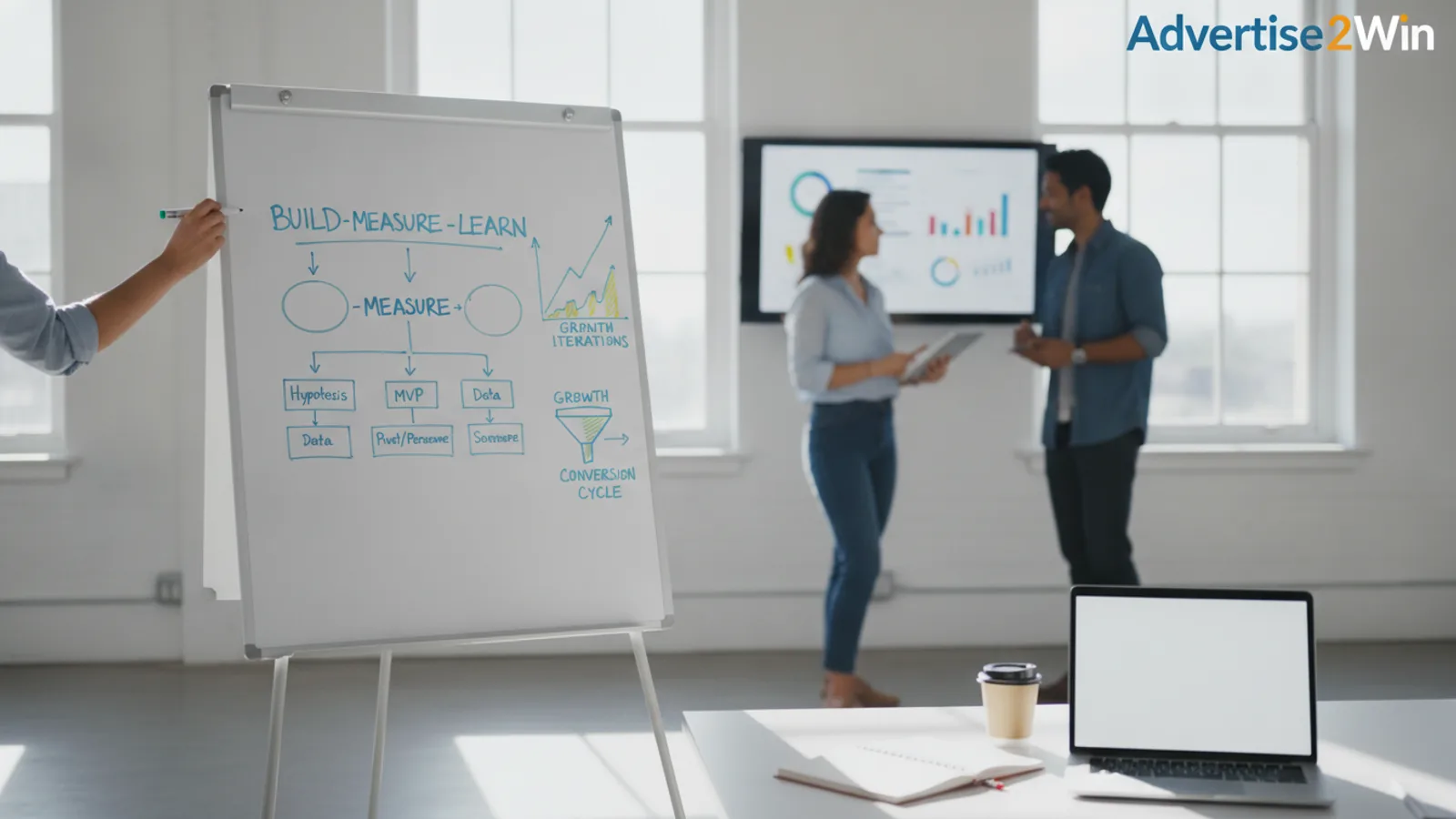
The Lean Startup
This guide explains how to approach the lean startup, including the preparation, practical steps, common mistakes, and final checks that help you finish with confidence.
Before You Start
Step-by-Step Instructions
Quick Reference
Common Problems When You the lean startup
Problem: Getting stuck building a "perfect" MVP. Many teams over-engineer their MVP, treating it like a final product. This delays learning and wastes resources.
Fix: Remind yourself that the MVP's only job is to test an assumption. Cut features aggressively. If it doesn't directly help you measure your riskiest assumption, it's not part of the MVP.
Problem: Ignoring negative feedback or data. It's easy to dismiss feedback that doesn't fit your vision. This can lead to building something nobody wants.
Fix: Embrace data, especially when it challenges your beliefs. View negative results as critical learning opportunities. Ask "Why?" constantly and let the data guide your next steps, even if it's uncomfortable.
Problem: Not defining clear metrics before testing. Without specific goals for your MVP, you won't know if your tests were successful or not.
Fix: Before you launch any MVP, decide exactly what you will measure and what numbers would indicate success or failure for that specific test. This makes the "Measure" and "Learn" parts of the loop effective.
Problem: Confusing a pivot with failure. Teams can resist changing direction, seeing it as admitting defeat. This can lead to throwing good money after bad.
Fix: Understand that pivoting is a fundamental part of the Lean Startup. It's a strategic adjustment based on new information, not a failure. Celebrate pivots as smart decisions that save your business from a dead end.
Problem: Only collecting qualitative data (opinions). While interviews are useful, they can be biased. Relying solely on "what people say" rather than "what people do" is risky.
Fix: Balance qualitative feedback with quantitative data. Track user behaviour, conversion rates, and engagement metrics. What customers *do* is often more telling than what they *say*.
Advanced Tips for the lean startup
Implement A/B Testing Early: For specific features or messaging, set up A/B tests within your MVP. This allows you to compare two versions of an element (A vs. B) to see which performs better with real users, giving you concrete data on preferences. It's a powerful way to refine your product.
Focus on Customer Lifetime Value (CLTV) from Day One: While early tests might focus on acquisition, start thinking about how your product will retain customers and generate repeat business. A product that acquires users but can't keep them isn't sustainable. Integrate retention metrics into your learning loops.
Utilise Cohort Analysis: Instead of looking at overall metrics, group your users by when they started using your product (e.g., all users from January). This "cohort analysis" helps you see how changes you make affect different groups over time, giving a much clearer picture of improvement or decline in engagement.
Automate Measurement Where Possible: Manually tracking data is fine for the very first MVP, but as you iterate, look for tools that can automate data collection (e.g., analytics software, survey tools, user testing platforms). This frees up your time to focus on analysis and execution, making your cycles faster.
Define Your "Innovation Accounting" Metrics: Beyond standard business metrics, identify specific metrics that track your progress through the Lean Startup phases. These could include conversion rates on an MVP landing page, user engagement with a specific test feature, or the success rate of validating a key assumption. These help you measure learning, not just revenue.
Embrace "Vanity Metrics" for Morale, but Not for Decisions: While you must make decisions based on actionable metrics, it's okay to acknowledge "vanity metrics" (like total website visitors or social media followers) for team morale. Just ensure they don't overshadow the critical data points that drive your strategic choices.
The Lean Startup FAQ
Q: Is the Lean Startup only for tech companies?
A: No, absolutely not. While it originated in tech, its principles of validated learning, iterative development, and customer feedback apply to any new venture, product, or even internal project within a larger organisation. It works for physical products, services, non-profits, and even marketing campaigns.
Q: How long should a Build-Measure-Learn cycle take?
A: The goal is to make cycles as fast as possible. For very early MVPs, a cycle might be a few days or a week. As the product becomes more complex, it could extend to a few weeks. The key is to keep it tight to accelerate learning and adaptation.
Q: What if I can't build an MVP myself?
A: An MVP doesn't always have to be a piece of software. It can be a landing page, a manual service, a survey, a mock-up, or even a presentation that gauges interest. The goal is to test a core assumption with the minimum possible effort, even if it means doing things manually at first.
Q: How do I know when to pivot versus persevere?
A: This is often the hardest decision. You should pivot when your key metrics consistently show that your core hypothesis is not being validated, despite several iterations. If you're not getting the desired customer behaviour, engagement, or validation for your problem/solution, it's time to consider a significant change. Persevere when the data shows promising signs, even if it requires minor adjustments.
Q: What is "validated learning"?
A: Validated learning means you're learning something real about your target market by observing their actual behaviour and choices, not just their opinions or what you assume they want. It's about using empirical data to confirm or deny your business assumptions, moving your business forward in a measurable way.
Final Checklist for the lean startup
Have you clearly defined the problem and your proposed solution?
Have you identified your riskiest assumptions?
Is your MVP truly the simplest way to test your core assumption?
Do you have clear, actionable metrics to measure your MVP's performance?
Are you ready to gather data from real customers, not just your team?
Are you prepared to honestly analyse feedback and data, even if it's negative?
Are you willing to pivot if your data proves your initial idea wrong?
Have you planned your next Build-Measure-Learn cycle based on your current learnings?
FAQ
What should I check before I start?
Check the goal, the key prerequisite, and any current instructions that could change the safest next step for the lean startup.
How can I tell whether the result is working?
Use the practical checks in the guide, pause if a required step is unclear, and verify the finished result against the intended outcome.